The FPL towers have officially kicked off the launch of the 2026/27 Fantasy Premier League season with three massive player price reveals. Following a public fan vote, we now know the cost of the biggest heavy-hitters in the game: Erling Haaland (£15.5m), Bruno Fernandes (£12.0m), and Gabriel Magalhães (£8.0m).
If you are planning to blindly drop all three into your Gameweek 1 squad, it is time for a serious reality check.
Triple-stacking these assets will eat up a staggering £35.5m—over a third of your total £100.0m budget. That leaves you with a tight £64.5m to fill out your remaining 12 roster spots, forcing an average spend of just £5.37m per player.
The FPL community is panicking about structural rigidity, but is a high-cost premium build actually a reckless gamble or a masterclass in risk management? Let’s break down the data and the tactical trade-offs.
Erling Haaland (£15.5m) — Overpriced but Essential
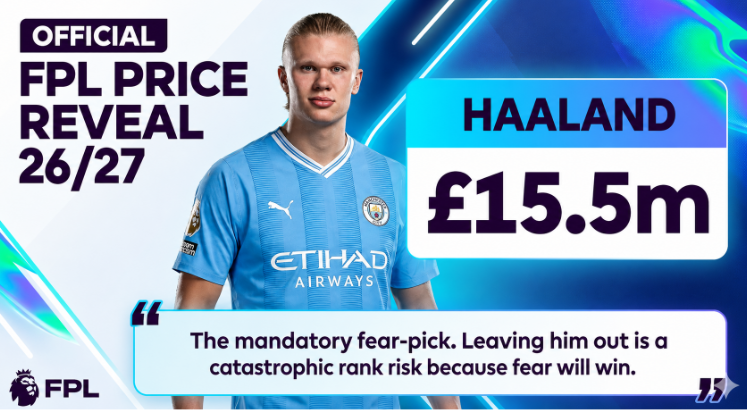
He is officially the most expensive player in FPL history, climbing £1.5m after a dominant 239-point campaign last year.
- The Casual Skeptic View: At £15.5m, Haaland destroys squad balance. With Mohamed Salah no longer in the Premier League to act as the default alternative premium captain, skipping Haaland completely opens up enough funds to build a lethal, highly flexible midfield.
- The Risk Management Reality: Haaland is a mandatory fear-pick. It doesn’t matter how much the community complains about his price on social media; fear will win come the deadline. His effective ownership will be massive. If you fade him and he scores an opening-day hat-trick, your overall rank takes a catastrophic, irreversible hit before the season even starts. He is overpriced, but necessary to protect your rank baseline.
Bruno Fernandes (£12.0m) — High-Yield Premium Security
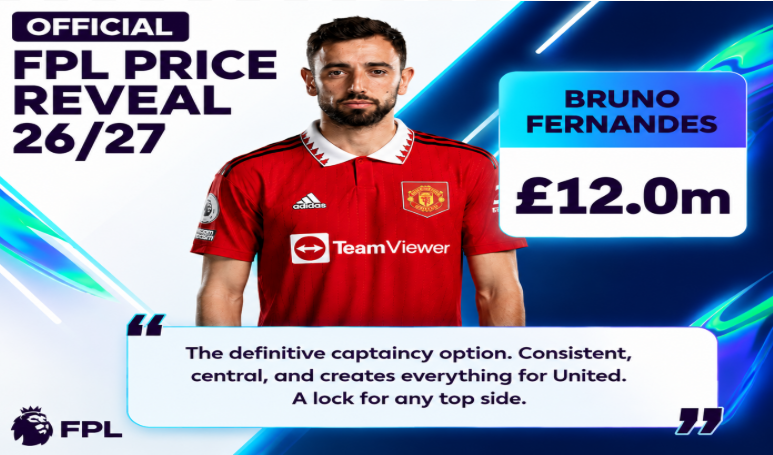
Bruno receives a massive £3.0m price rise from last season, matching his career-high starting price tag.
- The Casual Skeptic View: A £3.0m inflation spike is far too steep for a Manchester United asset, especially with unrevealed midfield options likely coming in cheaper at the £8.5m–£9.5m tier.
- The Risk Management Reality: Bruno’s price tag is completely justified compared to the other two premiums. He completely carried United’s attack last season, racking up a sensational 9 goals and 24 assists. He is nailed-on, commands penalties, and operates as the undisputed central talisman. He represents secure premium point-yield that you can comfortably set, forget, and rotate into your captaincy.
🇧🇷 Gabriel Magalhães (£8.0m) — The Unpopular Safe Haven
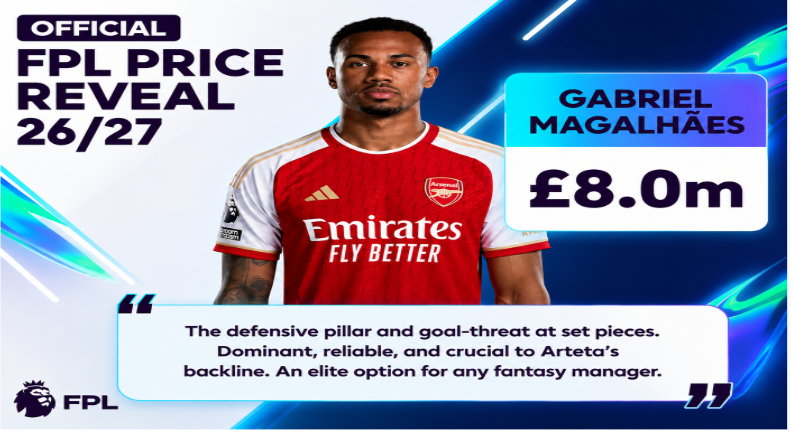
The top-scoring defender from last season sees a £2.0m price increase, making him one of the most expensive defensive assets in FPL history.
- The Casual Skeptic View: The community is rapidly backing away from Gabriel. FPL has tweaked the Bonus Points System (BPS) for 2026/27 to reduce overlap with Defensive Contribution (DefCon) points—a change that data models suggest would have heavily nerfed Gabriel’s bonus output last year. Spending £8.0m here feels like a trap.
- The Risk Management Reality: Don’t let the Twitter echo chamber scare you away. Gabriel might be unpopular right now, but picking him is the ultimate low-volatility, safe defensive anchor. Arsenal boasts an elite defensive baseline. Splurging on Gabriel gives you a highly secure, high-upside foundation that frees you from micromanaging your backline transfers later.
🏁 The Verdict: Aggressive Tactics vs. Balanced Roster Risk
The 2026/27 season is deliberately designed by the developers to crush the concept of a “template team.”
While a balanced roster gives you a stronger bench and protects you from being immediately priced out by early-season market trends, backing the premium heavy-hitters shields you from catastrophic, high-ownership rank drops. If you choose the aggressive route, lock in your premiums early and trust the elite point-security they earned from last season.
How are you balancing your budget ahead of Gameweek 1? Let me know in the comments if you want to look at:
- What formation (e.g., 3-4-3 or 3-5-2) you want to test to make this budget work.
- Which cheap budget enablers under £5.0m you are eyeing to fund these premiums.